

Meeting with a Purpose: An All-staff Gathering to Deliver Impact
Posted by Rebecca Firth • May 21, 2026
Almost 10 years ago, I was meandering the streets of Dar es Salaam on the back of a motorbike with my colleague Ivan Gayton. While he focused on avoiding the surprises of the city’s roads, my mind was busy with something else: as part of the Ramani Huria project, I had just witnessed what community-led mapping, using simple, localized tools, could achieve to address the capital city’s chronic flooding issues.
The tech wasn’t the best yet (field mapping was a pain, as you had to wait forever for the GPS points to load on the phone, several minutes each time; and there were no drones in these good old days), but as someone whose first connection to HOT was through mapathons, collaborating on this project shifted my view of how we needed to pursue our mission: working hand-in-hand with the people who were being most impacted, with tools accessible enough for them to learn and use quickly.
Fast forward to today, and we have developed a mature, interconnected mapping workflow with tech solutions that address key moments across the data cycle. This tool suite is designed with the aim of lowering the barriers of access, so any community is able to understand it and use it to improve their lives. A vision held by many in HOT’s earlier days in Dar es Salaam and other key locations, such as Jakarta, has now become a reality, thanks to our global team of dedicated staff and local volunteers. A group that, over time, has grown into an unusual mix of technologists, mappers, community organizers, humanitarians, designers, and geospatial specialists learning how to solve problems together.
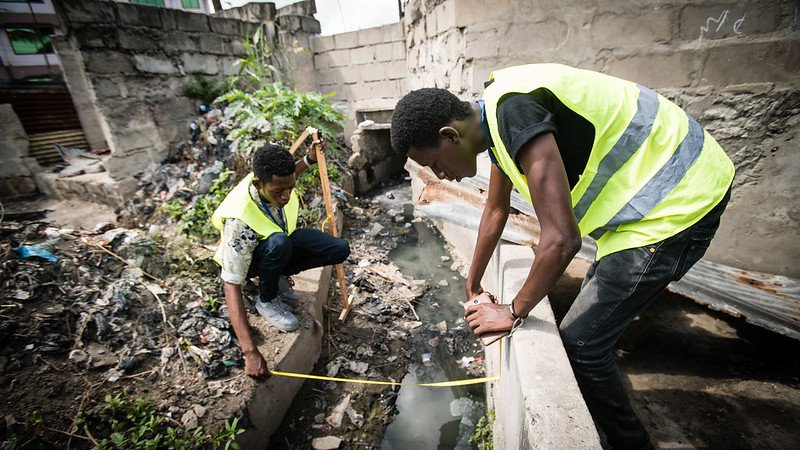
Drainage mapping by Ardhi University students. Credit: Chris Morgan, Open Map Development Tanzania, Dar es Salaam, Tanzania, 2017
Still, a paradox has emerged. How can a team of staff spread across six continents, operating in a fully remote setting, deliver an increasingly localized, tailored approach to provide community-led mapping solutions? We know it’s possible, but for that to happen, we need to make sure the team is aligned, eager to work together, and understands all the ins and outs of our tech and project offerings.
This is why I’m very excited to announce that, after three and a half years since our first-ever in-person all-staff meeting, our current staff and board members will meet again. Over the week, we’ll be doing three things:
- Our tech stack has evolved quickly, so many of our staff need to learn how it’s changed. During the Gathering, our entire staff will learn the 9 tools that make up our community-led open mapping workflow and explore the rapid advances the technology has made over the last two years.
- HOT and the context around us have changed dramatically in 3.5 years; we need to align with our strategic goals, especially regarding our Marketplace.
- Given our workplace context, many of our staff have never met each other (38% joined over the last 3 years). We cannot deliver the next phase of HOT if we operate as disconnected individuals. We need to (re)connect with each other in new ways that can make our ongoing virtual work more engaging and meaningful.
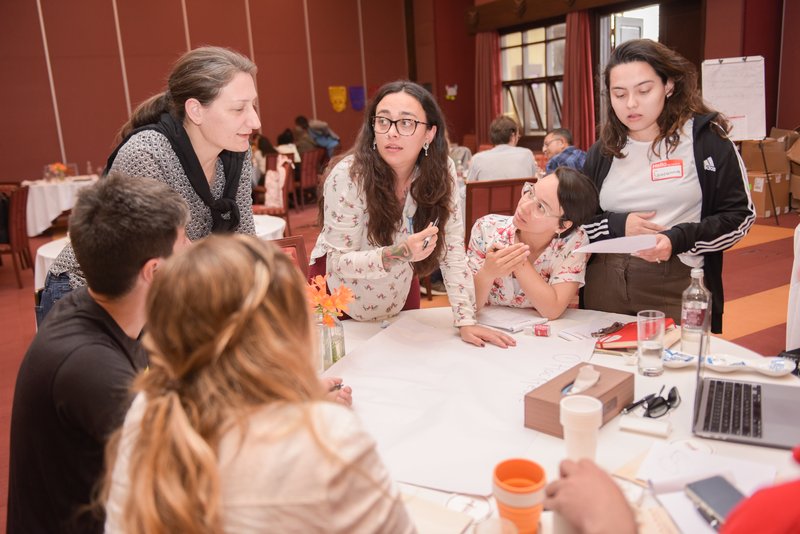
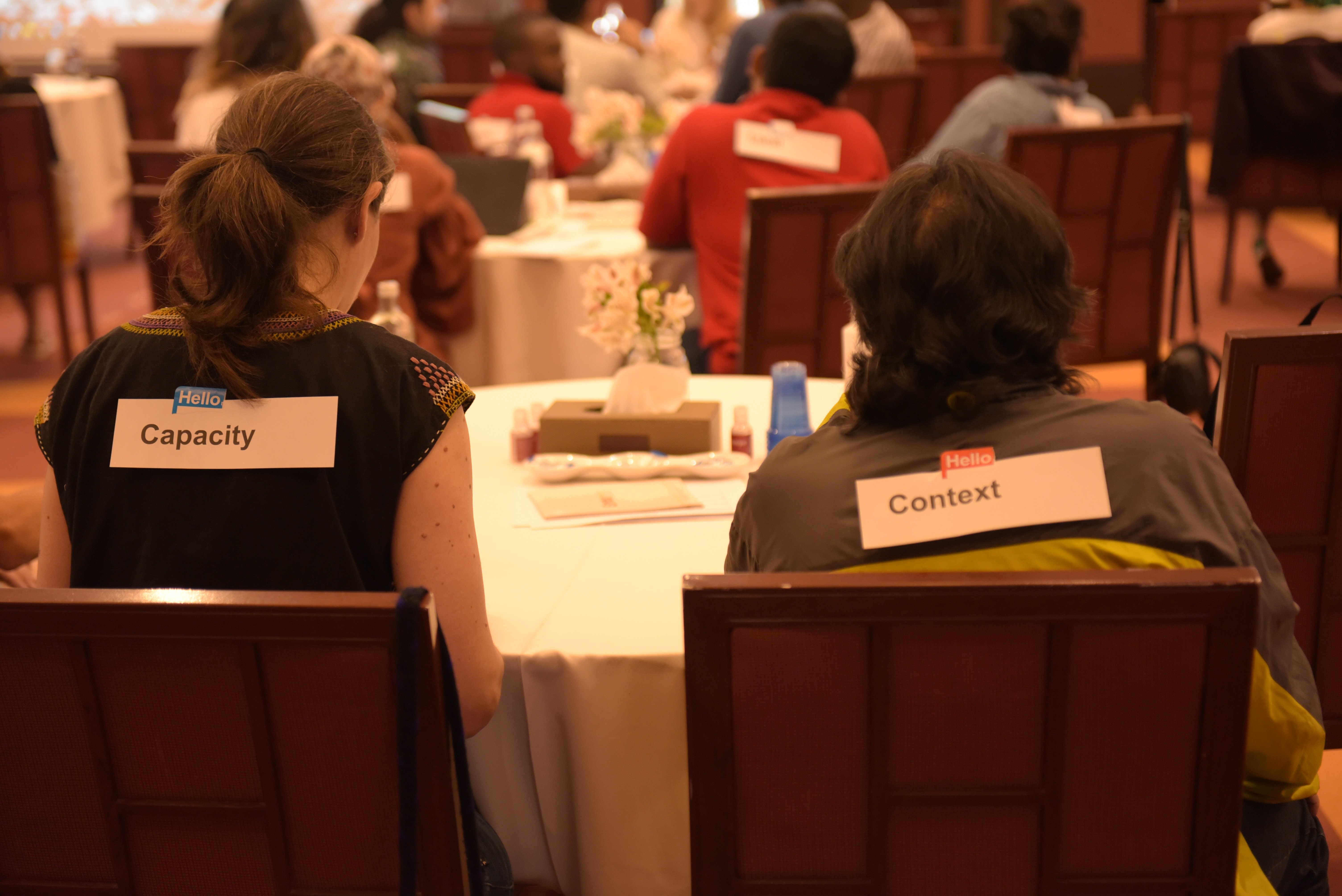
HOT staff during our January 2023 Gathering.
Technology isn’t the only thing that has changed in the past 10 years. While in Dar es Salaam, I was mostly worried by Ivan’s driving skills, as HOT’s Executive Director now, I need to consider the full implications of bringing together more than 70 people under a fragile economic and geopolitical landscape. But in a world of uncertainty, building trust, alignment, and shared understanding across a global team becomes even more important. Meeting in Indonesia—a country carefully chosen to maximize accessibility for our diverse, globally distributed team—this event is organized under the understanding that it should serve only one goal: to improve how we serve the communities we work with and boost our impact. And still, the real measure of this gathering won’t be what happens in person, but what happens afterward: faster collaboration, stronger local partnerships, better tools, and ultimately, better support for the communities we work alongside.
Share